

Pausetiv is a platform that helps women discover and navigate menopause with a structured medical approach: a real clinical tool that connects patients with healthcare professionals.
Their target? Women who want to face menopause with qualified medical support, and companies looking for concrete welfare benefits for their employees.
TL;DR - Key Results
- From zero to live in 4 months with a freelance team built from scratch
- Medical-grade platform that doesn’t look like a thrown-together MVP
- Metrics from day zero to develop only what really matters
- First B2B partnerships with companies for welfare benefits
- Autonomous team and agile methodology working from day one
When the mission matters more than the contract
April 2025. Clarice contacted me through a group of designers she had worked with to create Pausetiv’s first navigable prototypes.
The situation was classic early-stage: clear vision, strong problem, and zero code written.
They had well-made wireframes, a precise idea of what to build, but no one who could transform all this into a working platform.
The first thing that struck me wasn’t the product… It was Clarice.
A tough, prepared founder with a crystal-clear vision of the problem she wanted to solve. She was building a real medical tool for an undervalued and often overlooked issue: menopause.
And when a founder talks about a problem with that clarity, that determination, and that execution capability, you immediately understand if it’s worth working together.
I said yes in less than a week.
The contract and business metrics didn’t interest me—I believed in the mission and above all, I believed in her.
The compromise nobody wants to make (but needs to)
The biggest challenge with Pausetiv was strategic.
How do you build a serious medical tool with a startup budget and aggressive timelines?
Because here we’re not talking about a marketplace or a social platform where a bug is annoying but “ok, we can move on.” We’re talking about health, about women seeking medical support, and about healthcare professionals who need to trust the tool.
If the interface looks like a hastily assembled prototype, you lose credibility immediately. If the features aren’t clear, users abandon. And above all, if the data isn’t tracked well, you don’t understand what works.
We made a smart compromise from day one:
- Development speed yes, but polished interface from day zero: no visual shortcuts—users had to perceive seriousness and professionalism at first access.
- Functional MVP: few features but done well. Better to have three things that work perfectly than ten things half-broken.
- Metrics integrated from the start: we couldn’t afford to build randomly. Every feature had to be tracked to understand immediately if it was really needed or just taking up space.
All in 4 months, from zero to live.
Building the right team at the right time
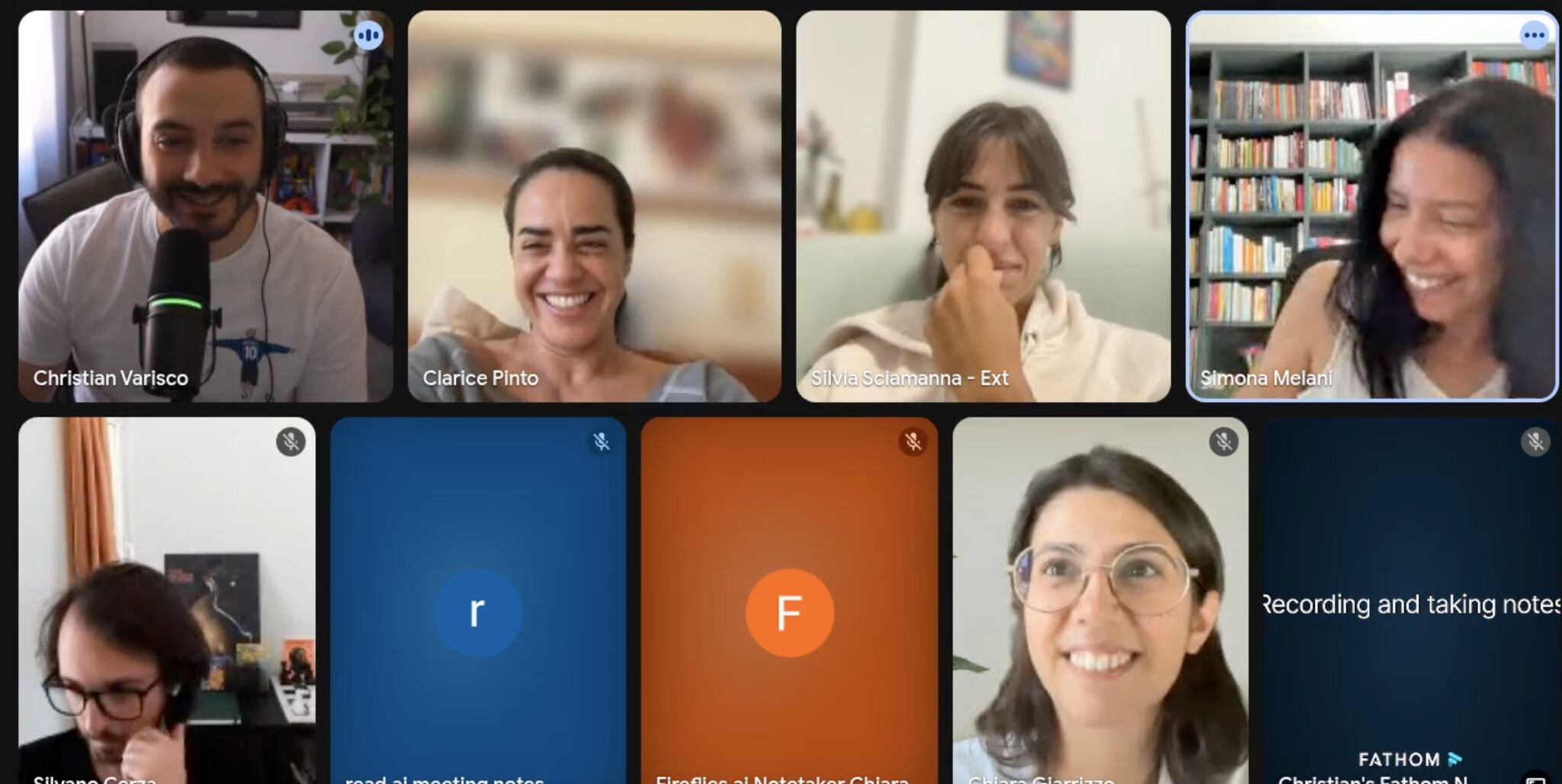
One of the first things I did was assemble a custom team for Pausetiv.
I brought in three people from my network: a full-stack developer who could move quickly without compromising quality, a product manager to structure the roadmap and priorities with discipline, and a designer who understood the importance of interface in a medical context. All freelancers, all used to working well with tight deadlines, all coordinated directly by me.
The methodology we set up was agile without following theory too closely, adapting it to the context’s needs. Weekly sprints with clear and measurable objectives, constant alignment calls with Clarice to keep everything synchronized, continuous backlog refinement based on user feedback and the metrics we were collecting.
The rule was simple: no feature without justification. If we didn’t know why we were building it, we didn’t build it.
Clarice proved to be a war machine from the start: clarity in decisions, ability to say NO when needed, and above all a precise vision of where she wanted to go.
This made everything easier. I didn’t have to convince her of anything. I just had to execute together with her.
The results speak (even though we’re just getting started)
In 4 months we went live.
From zero code to a working platform with a polished interface, core features implemented, and an integrated tracking system.
Initial feedback was positive. Early users appreciated the interface clarity and experience quality. No one said “it looks like a prototype” and no one abandoned because they were confused.
We started closing the first B2B partnerships with companies that want to offer Pausetiv as a welfare benefit to their employees. We’re not talking about big numbers yet, but we’re talking about concrete validation: companies paying to give their people a medical support tool.
And this, at such an early stage, is exactly what matters.
Today we’re continuing to develop, bringing new users on board, collecting data and feedback to understand where to invest the next efforts.
We’ve just begun.
The decisive factors
- Limited budget doesn’t mean poor product. It means making smart choices about where to invest quality. With Pausetiv we sacrificed secondary features to focus on interface and user experience. The result was a platform that doesn’t look like an MVP (even though it is).
- Metrics from day zero are a competitive advantage. Tracking everything from the start may seem like unnecessary overhead, but it’s the fastest way to understand what works and what doesn’t.
- The founder’s quality determines the collaboration’s quality. Clarice knew what she wanted, made decisions quickly, and knew how to say NO when needed. This made it possible to build fast without compromising direction.
Pausetiv reminded me of something fundamental: it’s not the budget size that determines product quality, but the clarity of vision and discipline in execution.
For founders reading this
If you’re building a medical tool or anything where credibility is everything, don’t compromise on the interface. You can have few features, but they must be presented well. Users judge your product’s seriousness in the first 30 seconds (so don’t give them reasons to doubt).
Limited budget is a constraint that forces you to focus only on what really matters. Few things done well always beat many things done poorly. Always.
Find someone who builds custom teams for you. Every startup needs specific people for its specific problem. A generic team will waste your time and money, while a custom team makes you go fast from day one.
Metrics at the beginning are a necessity. If you’re not tracking what your users do, you’re building in the dark. Integrate analytics from day zero, even if you have 10 users. That data will tell you where to go next.
The question isn’t “can we afford to build something quality?” but “can we afford to build something mediocre?”
And the answer, obviously, is no.